I just haven’t updated my blog in a long while. Don’t worry, I’m alive
{ 0 comments }
I just haven’t updated my blog in a long while. Don’t worry, I’m alive
{ 0 comments }
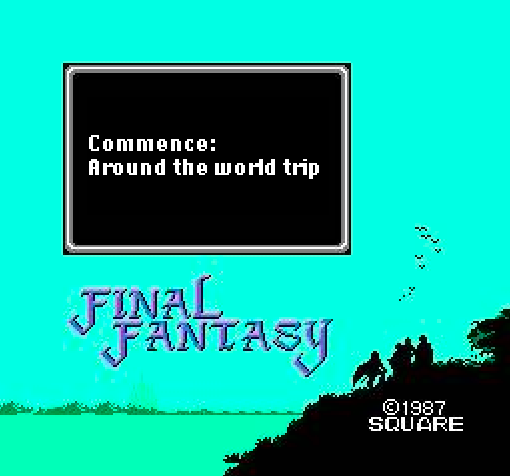 So we’re finally headed off on our round-the-world journey! I’ll be posting my stuff here as well as on twitter, instagram, and the like. We don’t have a definite itinerary yet, but we have some plans. Bangkok, lots of Vietnam, Malaysia, Japan, Chiang Mai, Laos, Bali, Singapore, Turkey, Italy, Croatia, Belgium, and Germany are all on the list right now, but that could change. Alyson will be working on several creative projects. I’m guessing some will involve art. I will primarily be working on a startup with my brother.
In Bangkok, I’m looking forward to the infinity pool on the roof of our hotel, the isaan food in some random restaurant that we went to with some friends last time, and an Indian restaurant on the top of a building that supposedly has amazing lamb carnitas. It is 44 degrees warmer than here in San Francisco, so I haven’t had a chance to stress-test my new clothing in the heat.
I’m feeling I’m at the beginning of Final Fantasy 1, which I got for my eighth birthday. I have no idea what to expect, but I’m betting I’ll earn some experience points. Or maybe I’ll be defeated by imps. (the game was a little too complicated for an 8-year old, and my brother and I sucked at it for a while)
{ 1 comment }
My name is Steve Hoyt. I am a product design strategist in San Francisco.
I help businesses and people create new products and services with highly focused points of view.